
How Extreme Arizona Heat Impacts Construction Timelines and Materials in Mesa, AZ
Arizona summers are not just uncomfortable for crews working outside. They change the physics of what happens when paint, stucco, adhesive, and other coatings hit a surface. Achieving superior house painting in this climate takes more than skill alone, because the wrong product, applied at the wrong time of day, in the wrong temperature window, will fail faster than the same product applied correctly in a milder region.
Knowing how heat affects construction timelines and material performance is not technical trivia. It is the difference between a project that holds up for a decade and one that starts showing problems by year two.
How Does Heat Affect Paint Application and Adhesion?
Paint applied to a surface that is above 90 degrees Fahrenheit dries too fast. When the top layer skins over before the paint beneath it has had time to bond to the surface, adhesion is compromised. The result shows up later as peeling, bubbling, or an uneven finish that did not come from poor materials. It came from poor timing.
Surface temperatures on exterior walls in Mesa, AZ can reach 160 degrees Fahrenheit or higher during peak summer hours, even when air temperature is 110 degrees. That is not the air temperature. That is the temperature of the surface itself. South- and west-facing walls in direct afternoon sun take the hardest hit and can be significantly hotter than the ambient air.
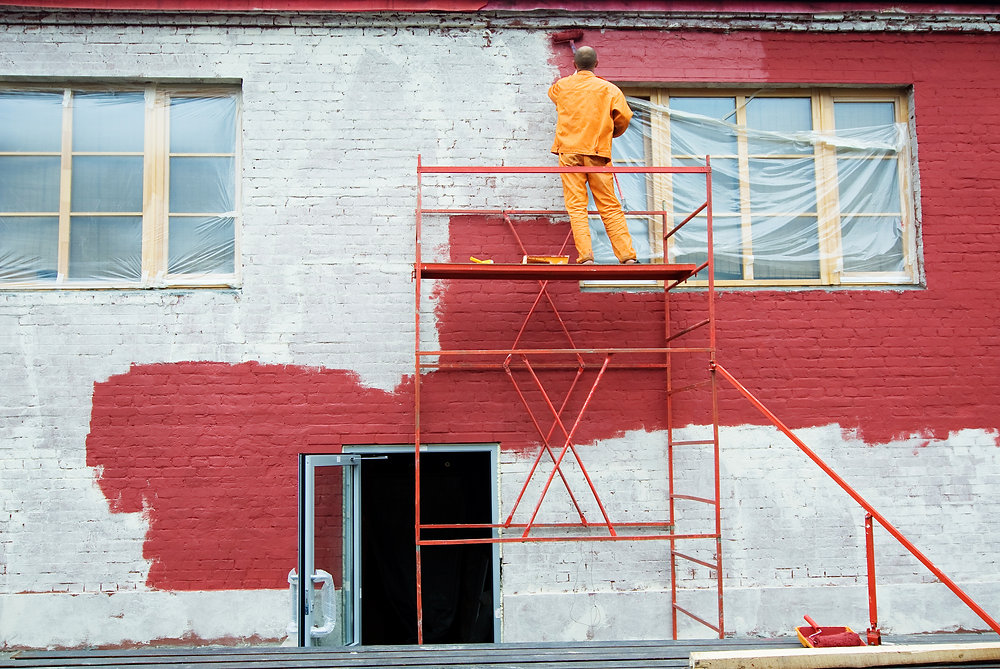
Our exterior painting crews schedule application for early morning, typically before 10 AM, during summer months. This keeps surface temperatures in an acceptable range and allows the coating to bond correctly before the heat climbs.
What Materials Hold Up in Arizona’s Climate?
Not all exterior coatings are built for Arizona. Standard exterior latex paint in a mild coastal climate performs differently than the same product baking under Arizona’s UV exposure at triple-digit temperatures.
UV resistance is not optional. Arizona receives more annual sunlight hours than almost any other state. UV radiation breaks down the chemical bonds in paint, causing fading, chalking, and brittleness over time. Coatings with high UV resistance ratings hold their color and integrity significantly longer.
Elastomeric coatings are particularly well-suited for stucco exteriors, which describes most homes in Mesa, AZ and the East Valley. Unlike rigid paints, elastomeric coatings flex slightly as surfaces expand and contract with temperature changes. Arizona’s diurnal temperature swings, sometimes 30 to 40 degrees between night and day, mean exterior surfaces are constantly moving. A rigid coating cracks. An elastomeric coating moves with the surface and maintains its seal.
Moisture resistance matters more than it seems in a desert. Monsoon season brings sudden, heavy rainfall between July and September. Paint or stucco coatings that have not fully bonded to the surface, or that were applied over inadequate prep, can trap moisture and blister or peel within a single monsoon cycle.
How Does Heat Affect Construction and Remodeling Timelines?
Heat affects timelines in two primary ways: scheduling constraints and material curing times.
For exterior work, scheduling constraints during summer are real. Concrete, mortar, stucco, and adhesives all have temperature windows within which they need to be applied for proper curing. Stucco applied in extreme heat can dry too fast on the surface before it has fully cured beneath, which leads to cracking. Our crews schedule stucco and exterior work for early morning hours during summer, and in some cases recommend delaying certain exterior phases until fall when temperatures are more consistent.
For interior work, heat is less of a scheduling constraint but still affects material behavior. Adhesives used in tile, flooring, and cabinetry installation have specific temperature ranges. A garage or interior space without air conditioning in Arizona’s summer can exceed those ranges and cause bond failure.
The solution is not to stop working in summer. It is to plan intelligently. Projects scheduled in fall and spring have the most flexibility. Summer projects require more careful scheduling and more attention to product temperature specifications.
What Surface Prep Steps Are Non-Negotiable in Arizona?
Surface preparation is where the longevity of any exterior project is determined. In Arizona’s climate, skipping any step in the prep sequence significantly shortens the life of the finished product.
Power washing removes the layer of dust, chalking, and oxidized paint residue that accumulates on Mesa, AZ exteriors. Paint applied over this layer does not bond to the surface. It bonds to the residue, which peels.
Sanding and scraping removes any remaining loose or peeling paint and creates a consistent surface for the new coating to grip.
Caulking seals gaps around windows, doors, trim, and cracks in the substrate. Unsealed gaps allow moisture from monsoon rain to get behind the new coating and cause blistering.
Priming is what makes the finish coat stick and last. The right primer for stucco in Mesa, AZ is not the same as the right primer for wood trim or masonry. Each surface type requires a bonding primer matched to its material.
Our team follows this full sequence on every exterior project. It is not optional. It is what the longevity of a Mesa, AZ project depends on.
Get a Free Estimate
Ready to protect a project from Arizona’s extreme heat? West Coast Painting and Construction has prepared and painted exteriors in Mesa, AZ since 1978, using materials and scheduling built for these conditions. Call (480) 827-2151 or book a free estimate online. Explore our exterior painting Mesa AZ and stucco repair Mesa AZ service pages for more detail.
Frequently Asked Questions
What does surface preparation include before an exterior paint job?
Surface preparation for an exterior paint job in Mesa typically includes pressure washing to remove dust, dirt, and chalking paint, followed by inspection and repair of any stucco cracks, sanding of rough or peeling areas, spot priming, and a full primer coat before the finish coat goes on. In Arizona’s climate, proper prep is not optional, UV exposure and heat cycles break down paint that is applied over a surface that was not correctly prepared.
Why does exterior paint fail faster in Arizona than in other states?
Arizona’s UV index is among the highest in the continental United States, and summer temperatures regularly exceed 110°F. These conditions accelerate the breakdown of paint film, binder, and pigment, especially on south- and west-facing surfaces. Monsoon season adds moisture cycles that paint not correctly primed cannot withstand. Paint that might last 10 years in a milder climate may fail in 5 to 7 years in Mesa without the right materials and preparation.
What type of paint is best for Arizona’s exterior conditions?
For Arizona exteriors, 100% acrylic latex paint with a high-quality primer is the standard. Look for paints rated for high UV environments, with titanium dioxide pigments that resist fading. Sheen level matters too, flat sheens show less dirt but provide less moisture resistance than satin or low-luster finishes. West Coast Painting selects materials based on the specific surface type and exposure conditions for each project.
How long does an exterior paint job last in Arizona?
A properly prepared and painted exterior in Arizona should last 7 to 10 years under normal conditions. South- and west-facing surfaces face higher UV loads and may show fading or wear sooner. The key variable is surface preparation and primer quality, jobs that skip prep or use lower-grade materials in Arizona’s climate often fail within 3 to 5 years.
About West Coast Painting and Construction
West Coast Painting and Construction LLC is a licensed painting and construction contractor based in Mesa, AZ. The company has served homeowners, property managers, and commercial clients across the East Valley since 1978. Services include interior and exterior painting, stucco repair, drywall, and full construction and remodeling. ROC 219500, ROC 219501, ROC 219502, all verifiable at azroc.gov. 711 S Drew St, Mesa, AZ 85210. (480) 827-2151.